






Choosing water sports for a French coastal escape
A French coastal escape can be as gentle or as energetic as you choose. From the broad beaches of the Somme Bay to Corsica’s clear gulfs, water sports offer a practical way to experience the landscape rather than simply observe it. For UK travellers, the best choice depends on your confidence in the water, the season, local conditions and the type of holiday you want to build around the activity.
Match your chosen activity to your confidence and coastal setting
Start by separating activities that rely on sheltered water from those that need waves, wind or stronger technical skills. Beginners usually gain more enjoyment from calm, supervised sessions than from attempting a demanding sport in unsuitable conditions.
Stand-up paddleboarding works well on protected bays, lagoons, estuaries and quiet coastal inlets. It requires balance, but a short introductory lesson can quickly build confidence. Choose a wide, stable board and ask whether the route stays close to shore, particularly if you have limited experience of open water.
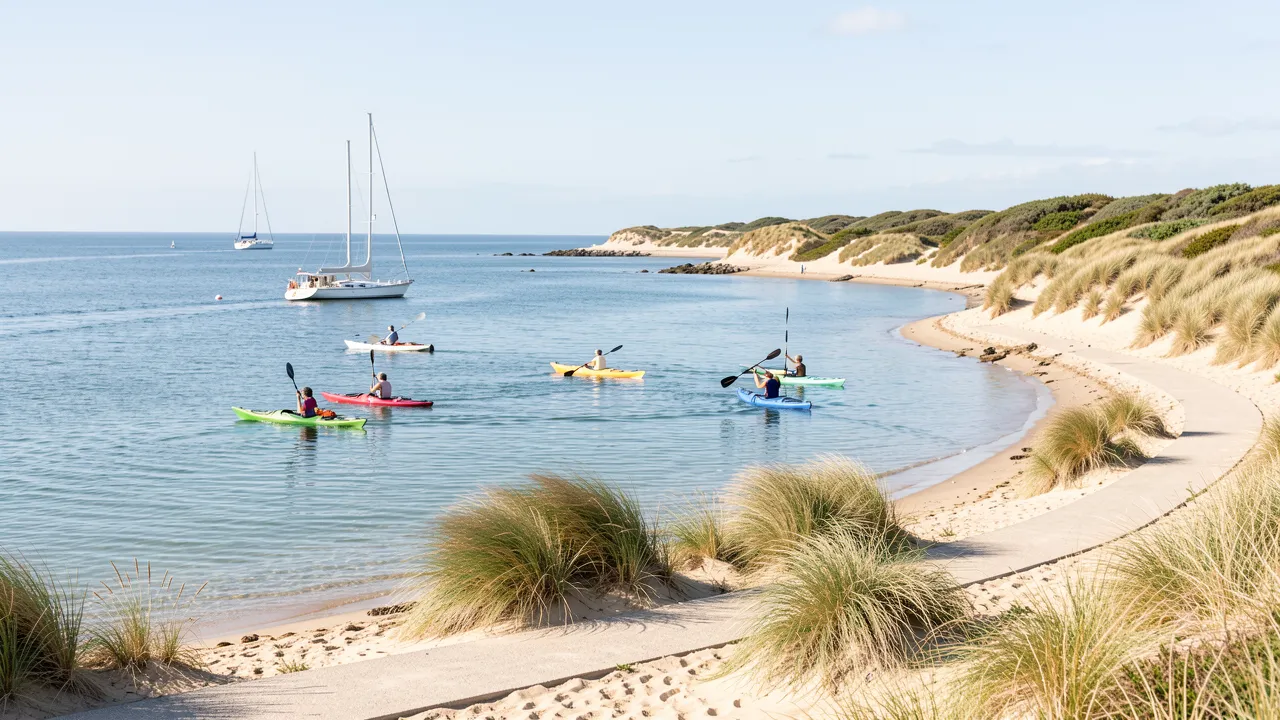
Kayaking is often a strong option for couples, families and first-time paddlers. Sit-on-top sea kayaks are easy to enter and usually feel reassuring in calm conditions. Guided trips can introduce you to cliffs, small coves, birdlife and coastal geology without requiring advanced navigation skills.
Sailing suits travellers who enjoy learning through teamwork and are comfortable following instructions. A beginner session on a small dinghy can be lively even in moderate wind, while a larger boat trip provides a more relaxed way to understand the coast. Surfing demands more patience, physical effort and familiarity with waves. If you are new to the sport, book a lesson at a beach with lifeguard coverage and a recognised surf school.
The Sud Cathare region combines active travel with rugged southern French landscapes, including foothills, river valleys and outdoor routes shaped by the Pyrenees. A local water sports guide can help visitors connect aquatic outings with canyoning, hiking and nature-based exploration in the area. Conditions on rivers and mountain-fed waterways can change after rainfall, so local route information and qualified supervision are particularly useful.
Choose calm water before chasing a bigger challenge
A holiday is rarely the best time to prove your limits. If you have only paddled on a lake, avoid booking a long sea crossing or an exposed downwind route. Begin with a one or two-hour session, then progress if you feel comfortable with the equipment, temperature and movement of the water.
For families, consider the attention span and swimming ability of every participant. Many operators set minimum ages, and younger children may need to travel in a double kayak or join a short coastal boat excursion instead.
Check tides, wind and local rules before you book
France’s coasts vary dramatically. The Atlantic and Channel shores can have powerful tides, changing currents and exposed surf. Mediterranean conditions are often calmer, but strong regional winds such as the mistral can make the sea challenging within a short period.
Before confirming an activity, check these practical points:
- Tide times and tidal range, especially around bays, sandbanks and estuaries.
- Wind direction and strength, not just the sunshine forecast.
- Sea state, swell height and the likelihood of thunderstorms.
- Water temperature and whether a wetsuit is supplied.
- Launch and landing points, plus any restricted zones.
- Safety cover, instructor qualifications and group size.
At Saint-Valery-sur-Somme and around the Baie de Somme, the tide can transform the landscape rapidly. Wide expanses of sand, channels and mudflats demand respect, particularly for independent walkers and paddlers. Guided activities are a sensible choice if you do not know the area, as local professionals understand the access points, current patterns and protected wildlife zones.
Ask direct questions about equipment and supervision
A reputable provider should clearly explain what is included. For paddleboarding or kayaking, this normally means a buoyancy aid, leash where appropriate, paddle, craft and basic safety briefing. In cooler months, ask about wetsuits, waterproof layers and changing facilities.
If you are booking from the UK, confirm whether the session is delivered in English or whether instructions can be understood with basic French. Safety directions need to be clear, particularly when an instructor signals a return to shore, warns of a boat channel or changes the planned route.
Build an active holiday that leaves room for the coast
Water sports are more enjoyable when they form part of a balanced itinerary. A full day of surfing, sailing or paddling can leave you tired, particularly if you are unused to sea conditions. Pair it with lower-intensity land activities that reveal another side of the destination.
In northern France, coastal paths near Saint-Valery-sur-Somme offer wide views across the bay, while cycling routes make it easy to travel between villages, beaches and nature reserves. In Corsica, a morning paddle in a clear gulf can be followed by a forest walk, a mountain village visit or a short hike above the coast.
Plan your more demanding sessions early in the trip, when energy levels are high. Keep one flexible day in reserve because weather may force a change of plans. A windy afternoon can become a cycling day, while poor surf conditions may suit a guided coastal walk or museum visit.
A well-planned water sports break feels safer and more rewarding
The strongest French coastal holidays are built around realistic choices rather than ambitious checklists. Select an activity that matches your current ability, book supervised instruction when conditions are unfamiliar and treat weather forecasts as part of the travel plan.
Key points to remember:
- Pick sheltered kayaking or paddleboarding for a gentler first experience.
- Reserve surfing and small-boat sailing for suitable conditions and structured tuition.
- Check tides, wind, water temperature and local restrictions before departure.
- Pack layers, sun protection, swimwear and footwear that can get wet.
- Combine time on the water with walking, cycling and local discoveries.
Frequently asked questions
Which water sport is best for a first-time visitor to the French coast?
Kayaking on sheltered water is often the easiest starting point. It is stable, social and widely available through guided coastal sessions.
Do UK travellers need to bring their own water sports equipment?
Usually not. Most supervised activities provide the main equipment and safety gear. Bring swimwear, a towel, sun protection and any prescription eyewear strap you may need.
Can water sports be planned outside the summer season?
Yes, but conditions are cooler and less predictable. Choose an operator that provides suitable thermal equipment, and expect routes or sessions to change according to wind, tides and water temperature.