






Discover Normandy’s horse heritage beyond the coast
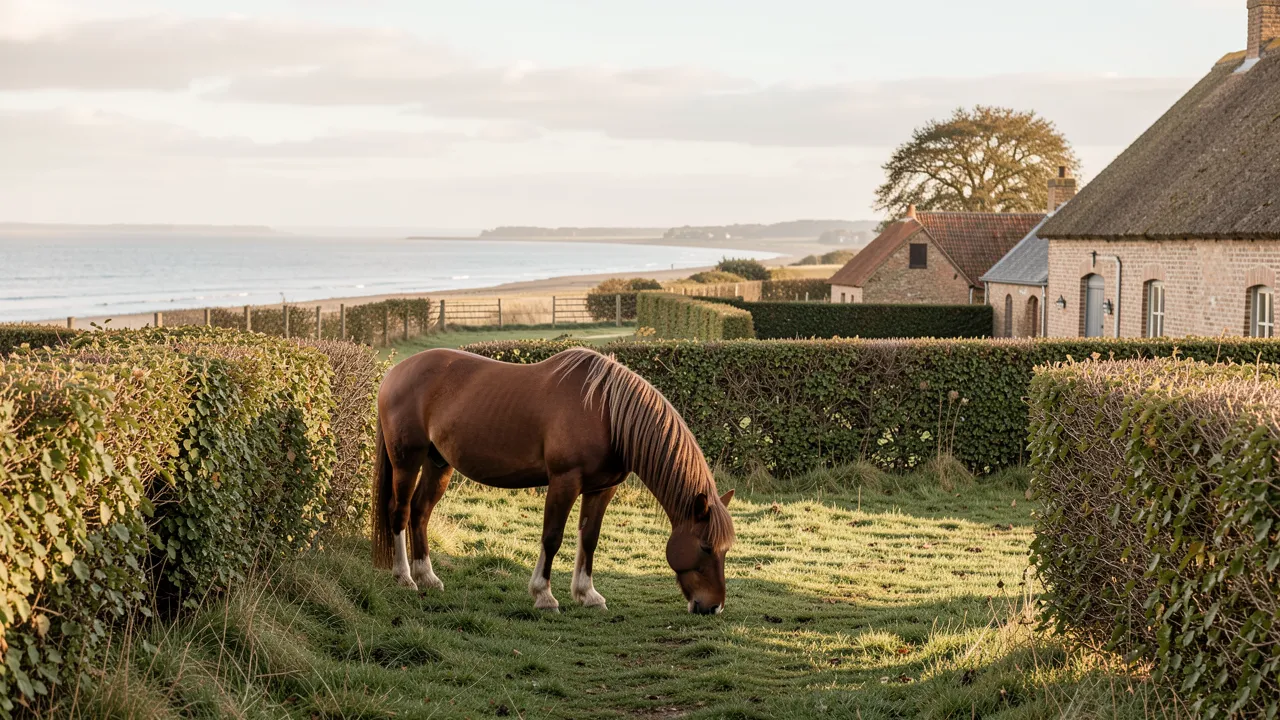
A stay on the Côte Fleurie can extend well beyond beaches, promenades and seaside markets. From Blonville-sur-Mer, Bénerville-sur-Mer or Tourgéville, the rural heart of Normandy is close enough for a rewarding day trip centred on the Cheval Normand. You do not need to ride to appreciate this heritage. Country lanes, stud farms, racetracks, village architecture and grazing meadows reveal how horses have shaped local life for generations.
Horses remain part of Normandy’s cultural identity
Normandy’s association with horses comes from its fertile grasslands, mild climate and long agricultural traditions. The region has raised workhorses, trotters, thoroughbreds and sport horses, each linked to particular landscapes and communities. In the Pays d’Auge, hedgerows frame pastures where horses often graze beside dairy cattle, while timber-framed farms and manor houses recall an economy built around land, breeding and rural know-how.
The term Cheval Normand can refer broadly to the horse heritage rooted in the region, rather than a single visitor attraction. It includes breeding practices, harness traditions, racing culture, veterinary expertise and the everyday work of grooms, farmers and stable staff. Looking at this heritage through travel offers a quieter alternative to a sport-focused break.
For a local starting point, Norman Horse connects visitors with the equestrian character of the Blonville, Bénerville and Tourgéville area. These coastal communes sit near landscapes where horses, paddocks and riding establishments remain visible parts of daily life. Their tourism offer can help you identify local routes, seasonal events and nearby countryside stops. This is useful when you want to combine a coastal base with respectful discovery of rural Normandy.
The landscape tells much of the story
The horse country of Normandy is not confined to famous racecourses or prestigious studs. A drive inland reveals broad grazing fields, carefully maintained fences, stone gateposts and farm buildings adapted for animals. These features are part of a living working environment, not a themed backdrop.
You may also notice how villages are organised around churches, markets, farms and small roads rather than major urban centres. A heritage day trip works best when you allow time for these ordinary details: a horse trailer outside a yard, a pasture seen from a public lane, or a village café serving local cider and cheese.
A paced itinerary makes a Côte Fleurie excursion more enjoyable
From the Côte Fleurie, a practical horse-heritage outing can focus on the Pays d’Auge or the wider Lisieux and Deauville hinterland. Depending on traffic and your chosen stops, plan roughly six to eight hours including travel, meals and walks. Avoid trying to visit multiple private studs in one day, as many are working businesses with limited public access.
A balanced route might begin with a morning drive through the countryside, followed by a heritage village, a public equestrian venue or a museum-style stop. Reserve the afternoon for a short walk, a local lunch and scenic roads back towards the coast. If a race meeting, carriage event or agricultural fair coincides with your stay, it can become the central activity of the day.
| Time of year | What you may experience | Practical advice |
|---|---|---|
| Spring | Lush pastures, foals, blossom-lined lanes | Bring waterproof footwear, as fields and paths can be muddy |
| Summer | Longer daylight, village events, active coastal stays | Book restaurants and any guided visit ahead |
| Autumn | Harvest colours, local food markets, cooler walks | Pack layers and check event calendars before leaving |
| Winter | Quiet roads, atmospheric villages, indoor heritage visits | Expect shorter opening hours and wetter conditions |
Choose public access before private access
Racecourses, designated trails, local museums, village markets and publicly announced open days are usually the simplest choices. Some breeding farms welcome visitors only by appointment, while others are entirely private. A closed gate, no-entry sign or unsigned driveway should be treated as a clear boundary.
If you find an advertised stable visit, confirm its format before travelling. Some places offer a guided tour of facilities, while others permit viewing from a designated area only. A horse-heritage visit is not the same as access to a working yard. Respect for that distinction keeps the experience pleasant for visitors and professionals alike.
Respectful behaviour protects horses and working stables
Horses are sensitive animals, and the routines around them often involve safety considerations that are not obvious to passers-by. Keep a calm distance from fences, avoid sudden gestures and never feed horses without explicit permission. Even familiar foods can be unsuitable for an individual animal, while reaching over a fence may encourage dangerous behaviour.
When you are on public roads, park only where permitted and do not block entrances used by horseboxes, tractors or emergency vehicles. Country lanes can be narrow, so drive slowly around bends and give riders, walkers and carriages generous space. Turn off loud music near fields and stables.
Photography also requires care. Taking landscape photos from a public path is generally straightforward, but photographing staff, riders or private facilities calls for permission. Avoid flash near horses, especially during handling, loading or training sessions. Responsible horse tourism means valuing the animals’ welfare above the visitor’s photo opportunity.
Normandy horse heritage adds depth to a coastal stay
A cultural day trip inland gives your Côte Fleurie holiday a different rhythm. You can move from sea air and Belle Époque villas to orchards, pastureland and villages shaped by equestrian traditions, then return to the coast before evening. The experience does not require riding skills, specialist clothing or an intensive sporting schedule.
Keep these points in mind when planning:
- Base your route on public venues, announced events and clearly permitted paths.
- Allow time for slow driving, local meals and unplanned countryside viewpoints.
- Check opening days and booking requirements for farms, museums and racecourses.
- Stay outside fences, do not feed horses and keep noise low near animals.
- Travel in spring or autumn for greener landscapes and a less crowded atmosphere.
- Pair horse heritage with regional food, architecture and village life for a fuller outing.
Plan a memorable Normandy cultural day trip beyond the coast
The Cheval Normand offers a meaningful way to see another side of Normandy. Rather than treating horses as a spectacle, you can approach them as part of the region’s landscape, economy and inherited knowledge. With a realistic itinerary and considerate behaviour, a short inland excursion from Blonville, Bénerville or Tourgéville can become one of the most distinctive moments of your coastal stay.